Hell or High Water
“The truth is, we know so little about life, we don’t really know what the good news is and what the bad news is.” - Kurt Vonnegut
The rain started a little after two in the morning. It built quickly from a light drizzle into a full “gravel on a tin roof” downpour. I squirmed restlessly in my cramped top bunk as the tin roared, face inches from the ceiling, running through every scenario of what tomorrow might bring.
Images of ocean chrome coho migrating through tea-coloured water flashed through my mind, alongside visions of a muddy, chocolate-coloured river. My brain circled the same thoughts over and over. More water could bring in fresh fish, as it had many times before. But too much could blow out the river, and nearly a year of planning with it.
I couldn’t settle it, but one thing was certain: wind and rain were strafing our little cabin, and they weren’t letting up any time soon. There was nothing to do but lie there, listen, and hope for the best.
Arrival
We arrived by boat that evening in perfect conditions. The early October air was warm like a summer’s day, and the sky was clear as could be. It was hard to believe that half an inch of rain was forecasted for that night. The lodge owner met us at the dock and loaded our gear into his truck. On the long drive up the logging road to our cabin, he briefed us on the local conditions. “Best coho fishing I’ve seen in years,” he said. He didn’t strike me as one to exaggerate, not that it mattered. I’ve believed every version of that line I’ve ever heard.
As our truck rocked over the deeply potholed road at a slow speed, we stared out the window admiring the emerald green river. “Yeah, it sure is low though” he said. “I haven’t seen it this low in October in decades. It’s the rain.” Obviously, he meant the lack thereof.
I filled him in on the upcoming forecast, and he seemed surprised. I got the impression that people out here didn’t abide by weather reports in the same way city folks do. Clouds and a dark sky meant rain, simple as that. Judging by the conditions right now, it was the last thing he expected.
He explained that when the ground’s been dry this long, the rain runs straight off the hills and into the river, which sometimes causes blowouts. Years of logging in the valley had turned the hills from a giant sponge into more of a sieve. The signs of it were evident–scars on the high slopes, gigantic stumps, and machinery left to rot on the sides of the road.
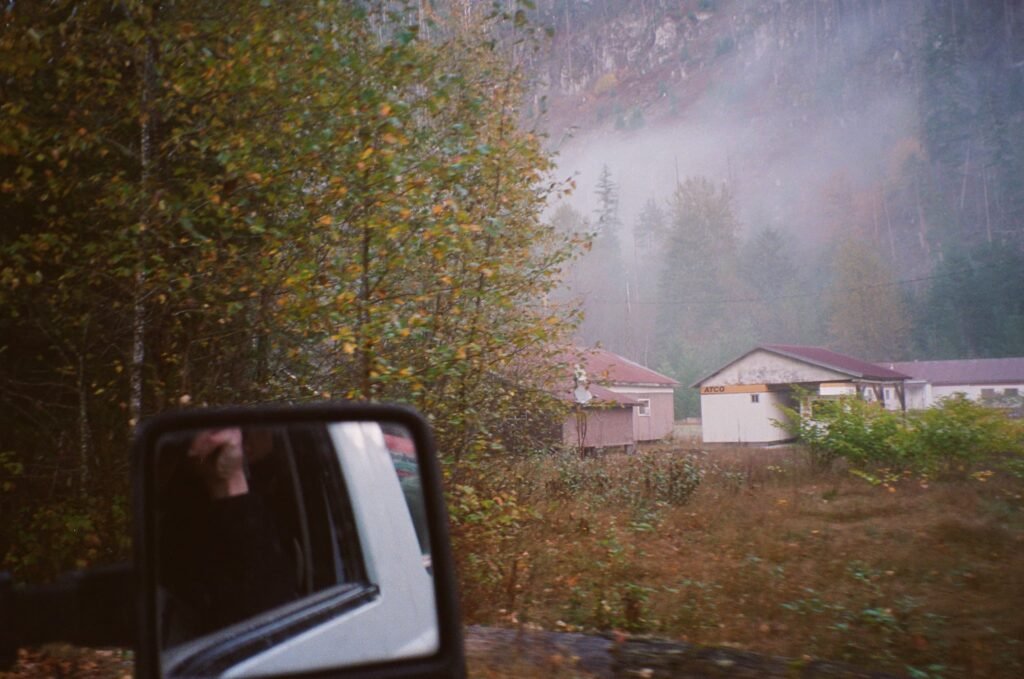
About halfway up, we passed the old logging camp. Yellow excavators sat strewn about in depressed attitudes, paint fading and rust bleeding through. The company had gone bust and shut down a few years earlier. It was all a little eerie, but still beautiful. Moss was already creeping up the sides of the portable bunkhouses, and saplings sprouted up in between abandoned cars. It felt hopeful in a way.
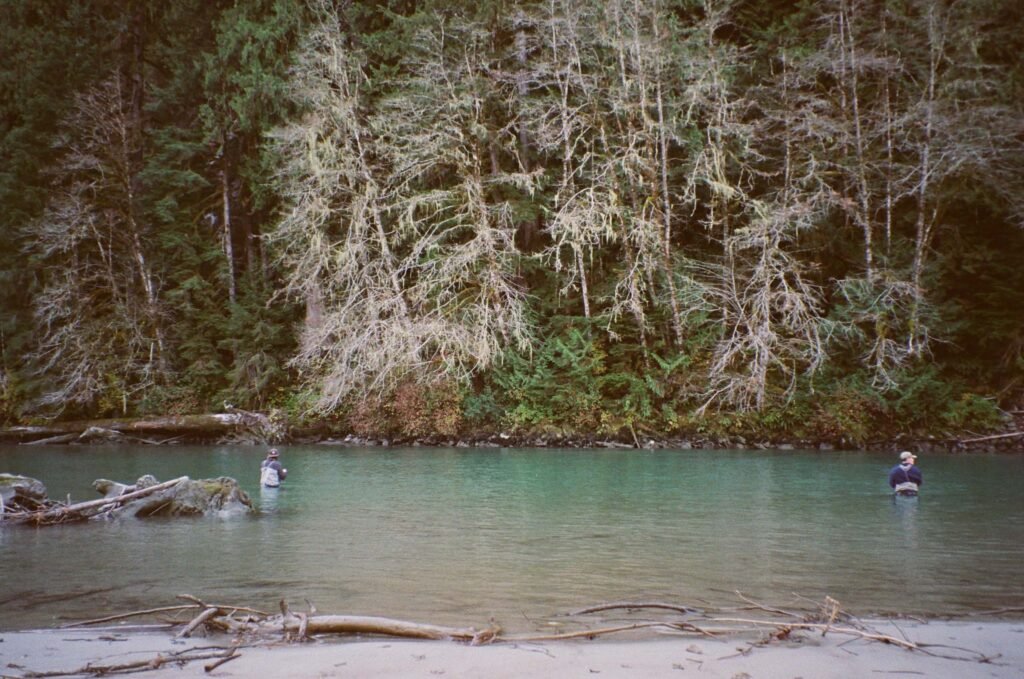
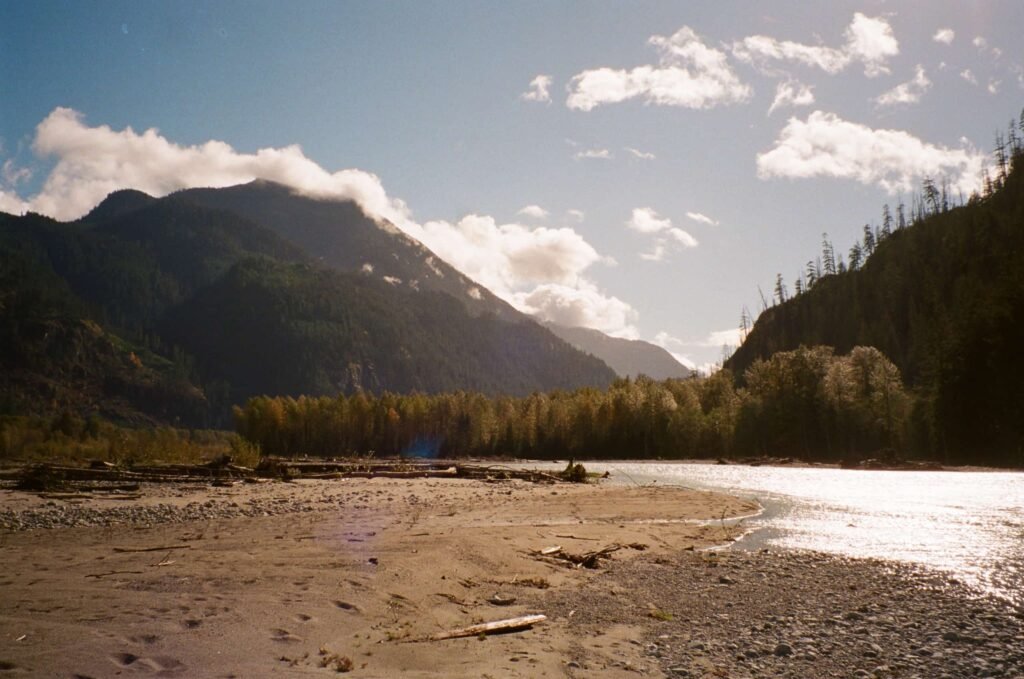
The valley was narrow, walled in by steep, high peaks blanketed by long, sweeping glaciers. Below, big cedars and hemlocks stood among red alder and maples, which lit up the forest floor with blazing yellow leaves. Through the center ran the river. It spread across a wide gravel plain and wound itself through countless braided channels. The first thing everyone tells you about this river is that it never stops moving.
We got to our cabin around five. It was set back a few hundred feet from the river and had a clear view of it. The lodge owner helped us with our bags again and pointed out a long run straight ahead where he said fish stacked up like pancakes in the evenings. I threw on my waders and rushed down to squeeze in some fishing before dark. On my second cast I hooked a beautiful coho of around seven pounds. He gave a good shake, and my first few tries at tailing him showed my early season rust.
A few casts later I was into another similar sized fish, and then an energetic bull trout measuring around twelve inches. I walked up river to tell my brother and dad, and get them on a few fish in my newfound honey hole. They joined me, and the old man landed a beautiful silver coho pushing nine pounds, his first in decades. After celebrating an auspicious start to the trip, we had a couple of beers by the fire, admired the clear night sky, and went to bed sure that tomorrow would be the day.
Swimming upstream
Fast forward a few hours and there I was, listening intently to the storm outside, hoping it would ease up. I drifted in and out of sleep. In my sleep I dreamt that the river rose to the edge of our cabin. A large bridge appeared beside it, and I drove over it until a traffic jam formed and left me stuck there. Suddenly I was back in my bunk. Something was circling outside, heavy on its feet. It sniffed and growled, then began banging on the siding, shaking the thin cabin walls. My heart raced as the banging got louder, and then I awoke to the sound of nothing but rain on the roof.
Morning finally came. I was tired from the lack of sleep but ready to get on the water. The rain had slowed but remained steady through the morning. Oddly, our barbecue had blown off the front porch. Must’ve been quite the storm.
We met our guide at breakfast. He was middle-aged and lean, with the weathered face of someone who’d spent most of his life outdoors. He was a man of few words, with a subtle East Coast accent that came through on certain ones, like “about.”
As we ate, we all had the same thing on our minds. “The river’s come up overnight but should still fish well on the softer edges,” he said. “This river cleans up fast.” He was right, more or less. The water was higher and darker than the evening before, and we started out hiking and working slower water tight to the bank. Early on we struck a double header with two nice coho from the same pool. Things weren’t so bad.
Downstream, my brother hooked a big fish in strong current, but lost it when a drifting log hit his line and tangled him up. That should’ve been my first clue of what was to come. The fishing slowed down to near a dead stop after that.
By midday the skies cleared and the sun came out. It should have been a good sign. Instead, the water started climbing and turning colour. I looked down and noticed my wading boots had disappeared, then my shins, then my knees. I thought back to the drive up, and to what we’d heard about the watershed: sieve, not sponge. It was easy to imagine imagine last night’s rain pouring straight down the hills and into the river. Across from us, a side channel that had been a dribble that morning was gushing water. Soon, more logs and sticks came floating down, and we knew it was time to make an exit.
By the time we hiked back to our truck, the water was the colour of a latte. The river was blown. Our energy sank and morale hit the floor. My waders and pack felt twice as heavy as they had at breakfast. Was that all the rain I’d absorbed?
We piled into the lodge truck and cranked the heat. The windows were white with fog from the heat coming off of our damp clothes. Or best chance, we decided, was fishing small inlets where clearer creeks flowed into the river’s mainstem. This brought a nice lift to the group and we worked our way down a beautiful tributary drifting beads for trout. I found my rhythm following my float down the current, waiting for a drop.
Eventually that drop came, so fast that I almost missed it. A large fish tugged and splashed on the surface for just a moment before coming clear of my hook. I was a bit disappointed but glad to have had a solid bite on the bead. Further downstream, the boys had one coho to hand. It wasn’t the day we had hoped for, but we all caught fish, and we were glad to have spent the day outdoors in such a fine valley, regardless of the flood.
Back at camp, we grabbed some refreshments and settled in by the fire. We talked for a while. Before long we were comparing Atlantic and Pacific salmon fishing, east versus west. Out here, salmon come back by the thousands, and you can catch them a dozen different ways. Atlantic salmon fishing, from the way our guide told it, has more in common with steelhead fishing.
“You can fish a whole week for one fish back home. Sometimes not even that,” he said. I asked him about salmon fishing with dry flies–it seemed crazy to me. The thought didn’t even faze him. I couldn’t help but wonder: what is it about not catching fish that some anglers like so much?
The fire was burning low when he stood up to leave. “You boys gave it a fair shake today,” he said, finishing off his beer. “The river’ll be cleaned up by morning.” Then, almost as an afterthought, he mentioned we should clean the barbecue extra well, since a local black bear prowled the grounds at night licking up scraps, and had been known to smash a few apart. Would’ve been nice to know a day earlier. That explained the dream, and the yardsale.
That night I slept just fine. The river roared in the distance, but I trusted that the valley would correct itself and clean up overnight. Either way, lying awake wouldn’t help. If the bear came back, I never heard it.
Redemption
In the moment, it’s hard to know what kind of luck you’re having. See, coho are patient fish. They’ll hang around for weeks until a good rain gives them the water they need to run. And when they do, it can be like a freight train. That second morning, the whistle was blowing.
Dark black percolated coffee and a hot fire in the wood stove woke us up and melted off our drowsiness before first light. Outside, there was frost on the ground. We knew that the cold night would drop the water level and clear it out. You could feel the excitement build as we ate. Today’s plan was different–with water lower, we’d raft 12 km downriver and hopefully encounter fresh pods of fish that had moved in from the ocean.
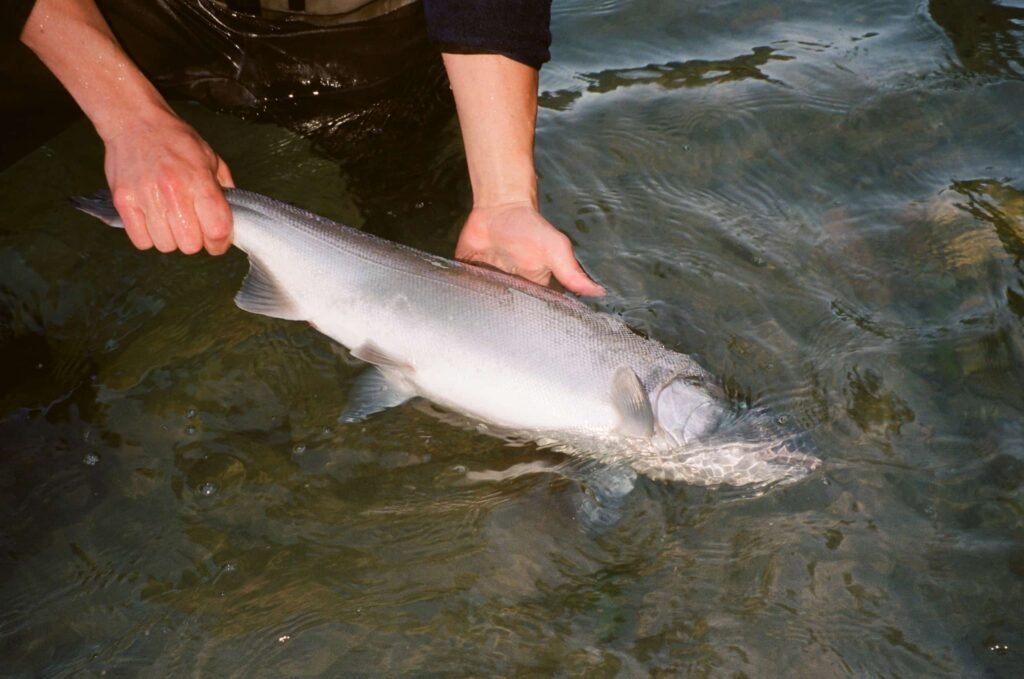
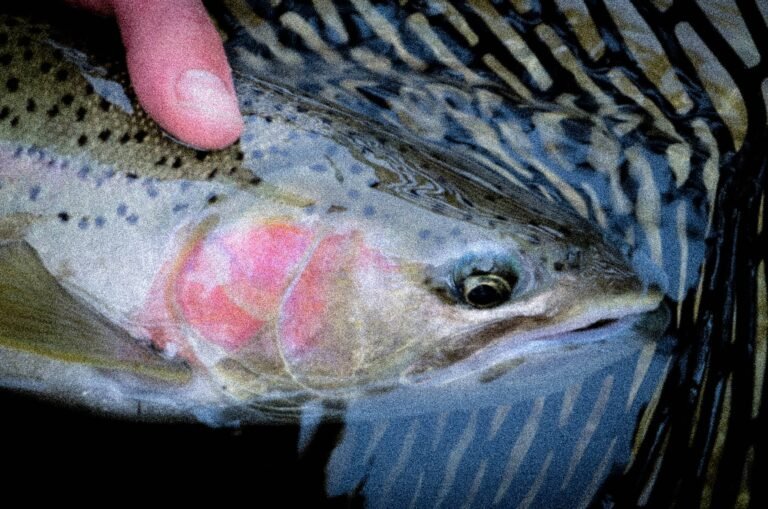
It didn’t take long for us to find them. The first pool we stopped at was short and very deep, glowing emerald blue in the morning light. We stood ankle deep on the edge of a steep drop off and cast to the far bank, letting our lines sink before retrieving. Right away, I hooked a massive coho that bulldogged down into the depths of the pool. He fought hard, and within a minute or so I had him to hand. This was a big one, around 12 pounds. He was thick in the shoulders, with a large kyped jaw, still shining with ocean chrome, iridescent blue glinting off his gill plates. I released him safely back into the pool. In short order I landed two more fish, though of slightly smaller stature. The day was off to an outstanding start.
We crept downriver, resisting the urge to cast to every nook that looked fishy. Off the sides of the raft, pods of fish scattered as we drifted by, their sides catching the sun before blending back into the green of the riverbed.
Another run downriver saw us standing a couple feet above the water, with a downward view of another extremely deep pool below. From time to time a dark shapeshifting shadow, a school of salmon, would move past where we stood. It wouldn’t be long before the group got a double, even triple header after spotting one. By lunchtime nobody bothered to declare “fish on.”
Related: How to Catch Salmon in B.C. Rivers
New beginnings
I let another coho go and looked downriver. My brother and dad were both hooked up again, grinning like kids in a candy store. Leaning against the raft to my left was my two-handed fly rod, the long, eleven-and-a-half-foot one I’d been flogging the river with for the past couple days. I’d tried it a few times and made some small improvements, but I’d never stuck with it long enough to get a bite.
I thought about the night before, and the guide’s East Coasters drifting dry flies for Atlantic salmon with unrelenting patience. I was conflicted. Usually, that sort of behaviour strikes me as madness. But now, with salmon practically lining up for my spoon one after another, it seemed like a more honest version of the sport. We were having almost too much fun. I reached for the two-hander.
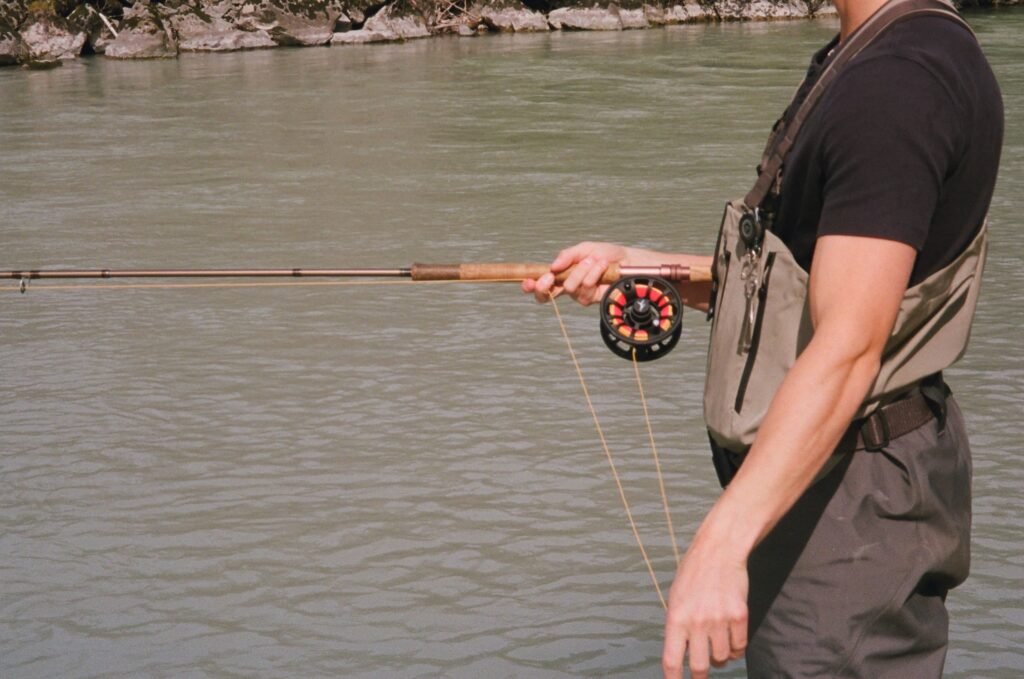
I grew up fly fishing, but spey casting was new to me. Our guide stood by patiently while I fumbled my way through snap-T after snap-T. This time, I was determined to see it through.
I worked through the steps in my head, trying to do it smoothly, and on rhythm. This was all made harder by the heavy sink tip and fly I was throwing around. I pulled out line to attempt a longer cast. This was going to be the one. I snapped the line upriver, drew my rod tip across and up by my right shoulder and launched the rod forward.
The Skagit head came around like a whip, catching my ear and neck. I stood there stunned for a moment, and then checked for a hook in my neck. Luckily, it had missed me. Our guide had watched the whole thing, and calmly walked me through what went wrong. At that moment I wanted to fold. I was in pain, tired of stripping line, and wanted to catch fish like everyone around me. But he gave me a serious look, and I knew I couldn’t let him down.
On his guidance I walked up river to a point where I could cast further out and have time for my line to sink to the fish holding deep down below. Clearing my head, I carefully cast out as far as I could into the current. The fly sank, and I watched as the sink tip disappear below the surface. As it got in line with the presumed holding spot of fish, I stripped madly and watched as three or four fish followed my fly, darting away before a strike. My heart jumped in excitement. I did it again, and got the same follow, no strike.
I’m not one for changing flies too often, but this called for a “redemption” fly. I tied on a smaller, sparkly woolly bugger dressed with some Christmas tree coloured tinsel and cast out again, swinging toward the holding pool. When the swing slowed down I stripped and stripped, until I could strip no more. A fish had grabbed my fly. I gave one final firm pull on the line to set the hook and lifted my rod tip. I was on. I scrambled to get him on the reel and fought him for a minute. Wading deep, I tailed the fish and admired my first ever salmon on the fly.
I just stood there for a moment, looking at him. In that moment, the flyfisher’s manifesto started to make a lot more sense to me. Our guide just looked at me and gave a single nod in approval.
Making a splash
Our final run was blocked in by a dense forest at our backs and high treed cliffs in front of us. The river bent around a corner and pushed up against the rock face, creating a perfect holding area for fish. We parked our raft on the beach and waded out the gradual slope toward the rocks.
We found a fresh pod of coho within the first few casts. After landing a couple of nice ones, I waded a bit further upstream and threw my spoon toward the rock face, stopping it a foot short. I let it flutter down for a two-count, then started to reel.
A salmon grabbed on and beelined downstream. Instantly, I knew this was a heavyweight. My reel screamed as he bolted away, seemingly with no regard for me. Then he jumped. His shining body shot clear out of the water and wiggled midair for a moment before crashing back down in a heavy splash. Behind me, the rest of my party stopped fishing and stared. They knew as well as I did that this was not one you wanted to lose.
I kept tension but let the fish do as he pleased. I was at his mercy; there was no forcing him to come to land. He tore upriver, then down, jumping three or four more times, and somehow the hook held. How well, I did not know. Finally, he settled in deep at the base of the rock wall, and we arrived at a standstill. He held there like an anchor as my line hummed in the current. Nothing moved.
Slowly, I waded backwards, trying to lightly entice him out. A couple yards back I started gaining ground, inching him closer. My heart raced. Just as I thought I had a chance at him, he took off in another furious dash, leaping straight out of the water.
My whole party stood behind me with their rods down, watching. After a couple more minutes he tired and I closed in. I grabbed him firmly by the tail and turned him on his side.
Without a doubt, this was the biggest coho I had ever caught, not to mention the prettiest. He was a perfect specimen, seemingly straight out of the ocean. His fins were translucent, scales impeccably shiny, and back a deep blackish blue. He was particularly tall in the back and thick in the neck and head, giving him extra weight and power.
I held him underwater and admired him, appreciating the fight he had put up. I snapped a quick photo and then held him in the current, loosening my grip until he swam back off into the depths. The group congratulated me, and we guessed at size. Even the guide chimed in. “I would say close to 18,” he said. It was the first time I’d heard him guess at size.
The end
I waded out of the chilly water and sat down on a rock to rest. I cracked a granola bar and sipped from the grainy, cold ends of my coffee thermos. Overwhelmingly, I felt lucky.
I’ve spent a lot of time thinking on river conditions. I’ve pored over weather forecasts and river gauges. But it’s never done much to help. A couple of nights earlier, I’d lain awake convinced that the coming storm would tank our trip. Ironically, it was probably the thing that made the fishing so incredible. As country singer John R. Miller puts it “some blessings have disguises.”
I finished my snack and just sat there, admiring the electric blue water, noticing the occasional splash of a salmon jumping. Everything felt very calm. On the last two miles of the float, I didn’t make a single cast.