

“There will be days when the fishing is better than one’s most optimistic forecast, others when it is far worse. Either is a gain over just staying home.” – Roderick Haig-Brown
November—it’s the time when many people start “winding down” for the year. Winter preparations start; the skis are taken out of the garage. Many people go on holiday. The salmon run is all but over, and many sportsmen retire their rods in exchange for rifles and shotguns.
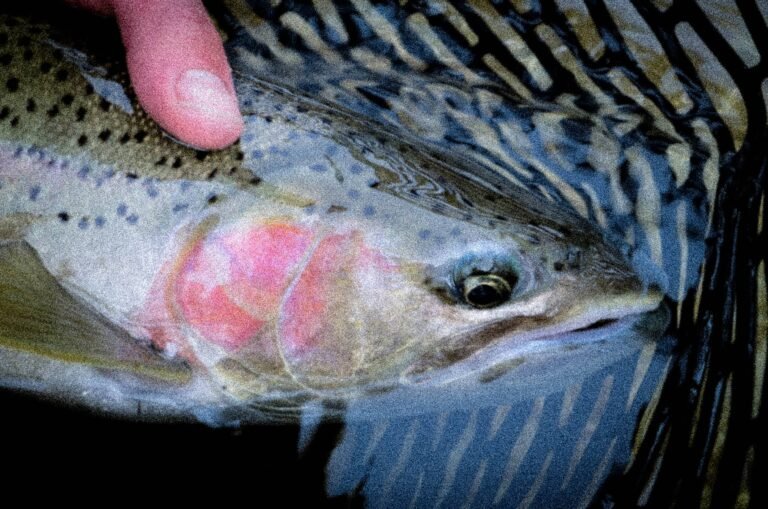
The bucks may not like it, but the trout sure do. It’s because salmon eggs are abundant in the river at this time, and the trout have an appetite for them. If you have no ambitions to hunt, or you’re simply a devoted angler looking to extend your season into winter, then “trout beading” is for you.
THE SETUP
Trout, not salmon, are the goal, though the odd late-season migrant might show up, so a medium-strength rod of over ten feet is all you need. Eliminating line drag on the river’s surface and setting quickly on bobber drops are the keys to success here. A baitcasting (level-wind) reel is ideal, since it lets you cast and set the hook with one hand.
Soft beads are all the rage these days among the salmon people, and for good reason. But hard beads are a proven trout favourite thanks to their small size options (down to 6 mm), colouring options, and neutral buoyancy. This isn’t to say that soft beads won’t work, but hard beads are a proven favourite with these fall fish.
On your line rig a 25 gram sliding float with a ¾ oz inline weight or one #7 egg weight. You can refer to our article on salmon fishing for a more in-depth guide on how to set this up.

For leaders, use 8–12 lb fluorocarbon pegged with a variety of 8 mm and 10 mm beads in red, pink, and peach, paired with size 2 or 3 hooks (as shown above). Keep your leaders in the 12–16 inch range, and use a snell knot to tie on your hooks.
Having a variety of pre-tied leaders will give you the flexibility to quickly change beads and experiment on the water. In my experience, 8mm red beads with a “blood dot” work the best.
THE TECHNIQUE
It all boils down to this: location × (depth + presentation) = trout.
To imitate a natural salmon egg, like the ones fat Fall trout like to feast on, your bead should just tick along the bottom, bouncing off rocks and debris. Too shallow and fish won’t really notice your presentation; too deep and you’ll snag your weights.
As a rule of thumb, if you’re not occasionally tapping boulders or bringing in the odd twig/leaf, you’re not deep enough. With a bit of tinkering, you’ll develop a feel for it, so keep experimenting.

Without labouring the point, keep your line off the water—especially on those long, heroic cross-river casts. If your line is lying in the current, it’ll drag your float and make the egg move unnaturally underwater. This will seriously hurt your chances of getting any takes.
Keep your rod tip up and reel in the slack as you go; that way, when the float drops, you can set the hook quickly, giving you the best chance at getting the hook firmly in the fish’s mouth.
WHERE TO FIND FISH
Finding where the trout are is one of the most important aspects of fall bead fishing. When you find a nice run, work it top to bottom to locate where they are hanging out. In general, here are a few places to try:
- Seams: Look for areas off to the side of fast flow where the water slows down. Try the inside (close bank) and outside (far bank) seams.
- Under cover: Trout like cover—cast under trees or overhanging branches and watch your bobber drop. Just try not to get your bobber hung up!
- Pocket water: Thread your float down the sides of rocks and large obstacles; big objects in the water change the current and often provide areas of underwater respite for fish.
- Foam is home: Foam lines can form where currents converge, and food collects, making them reliable feeding lanes for trout.
- Behind salmon: If you can locate areas where salmon are holding, drift your bobber behind them—trout often hang out here and grab loose eggs as they break free from the gravel.
- Tailouts: Right before a run turns into a rapid, it will get shallow and “tail out.” Trout sometimes hang out here.
Hopefully, the run you are fishing has a few, or most of these features. Try a handful of casts in each spot, slowly working from close to far away from you. You have to locate the fish. They won’t chase a bead like they do a lure.
Where not to look: You probably won’t have much luck in very fast, very shallow, or uneven current. If your float is ripping downstream or bouncing through waves, it’s hard to spot a strike, and the presentation won’t look all that appealing to fish.

If you aren’t getting any bites, move on up the trail and try somewhere new. And don’t be afraid to experiment a bit. If you feel that a section of water might hold some trout, go for it. Unexpected things happen where you would not typically look. After all, you never know until you try.
CONCLUSION
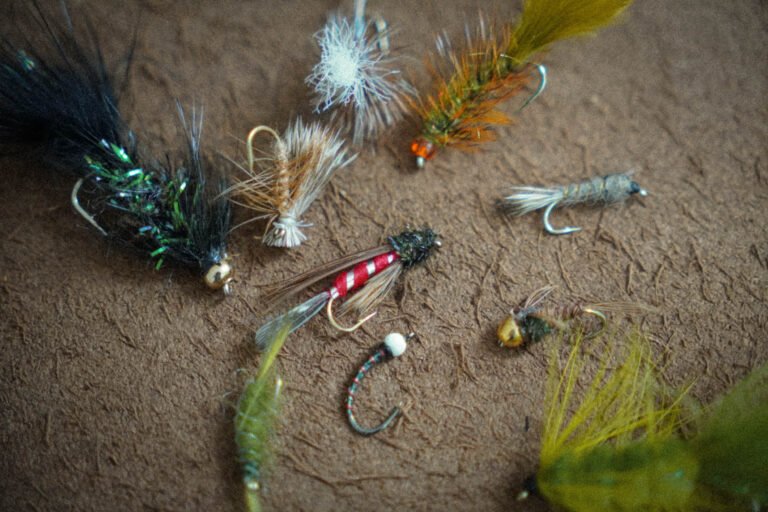
You’ll notice that fly-fishing was not mentioned in this guide. Fly fishing can be a great way to “trout bead”, but in my experience, a balanced bobber just works better. Why? Because achieving dead drift at long distances is much, much easier. But if fly fishing is your thing, have at it. You can peg a bead to your leader the same as you would with a casting reel. Instead of attaching a strike indicator, many people prefer to “euro nymph” with trout beads or egg patterns.
Fall bead fishing is an absolute joy, and, when done right, can yield exceptional results. In most streams where anadromous fish spawn, it offers terrific fishing opportunities from as early as summer through December and sometimes as late as February. At times, you may find yourself bitterly cold, but there will also likely be times when you forget all about the cold and thank yourself for getting out of bed that morning.
Learn to drift well and you’ll have a skill that pays dividends in every season, whether you’re chasing salmon, trout, steelhead, or anything in between. As always, please practice safe handling techniques. Minimize contact with fish, keep them wet and in the water as much as possible, and properly revive them prior to release.